How to choose a dentist in Baja California

~ ~
rana de la Bajaf

You might be disappointed. Our advice is going to be pretty much the same as that for choosing a dentist in Outer Mongolia. On the bright side, our dentists are more plentiful and better trained than what you might encounter in Outer Mongolia.

The first step in both places is to overcome the cultural discomfort of traveling for professional services beyond one’s neighborhood. “What if I pick a bad dentist?” is the greatest fear when you’re in a different town. Well, relax. Bad is very rare these days because of all the quality controls in place. The worst we’ve heard of so far has been an average dentist who charged like he was the best.

After that, we recommend you research your options thoughtfully, whittle your candidates down to a short list of four to six dentists, interview them, and make your decision based on who made the most sense to you.

“My dentist in Los Angeles thought he was a Mercedes mechanic” writes one of our correspondents. “I left him fifteen years ago and have been going to a dentist in Tijuana ever since. Now I’m not afraid to sit in the chair and, even better, my teeth stay fixed.”

Our correspondent is not alone. Because the dentistry in Mexico is of world-class quality while also being relatively inexpensive, you’ll find concentrations of dentists along the border from Tijuana all the way to Matamoros. The Asociación Dental Mexicana counts more than five thousand members in the central part of Tijuana alone.

The ADM didn’t count the many dentists who are not members. Nor does that number include the thousands of ADM members in Tijuana who practice outside of downtown and the Zona Río. It does not include any of the hundreds of ADM dentists in Ensenada, Rosarito or Los Algodones, nor the large numbers in Mexicali and Tecate. Dentistry along this border is very serious business and has been so for some while now.

Mike, the unwily coyote

~ ~
inmigracion.jpg

Mike is one of Tijuana’s newer immigrants from the United States. He moved here during the twenty-first century. He recently found himself involved in what the law broadly refers to “human trafficking”. In our local slang, he was a coyote. Or, as he says, “I helped people get into the U.S. without all the red tape.”

Mike had been a salesman in southern California who was “transitioned” into a commission-only job. He came to Tijuana because he couldn’t afford the place where he used to live. He wound up near the Otay crossing because, as he says, “the rents are low and we’re real close to the border”. Unfortunately for Mike, sales jobs were still far away.

“I tried a lot of jobs. Another gringo in the Zona Norte hooked me up with a telemarketing gig, a boilerroom in Mira Mesa, but I couldn’t meet their sales quotas. I walked the streets of Bonita for a remodeling contractor, telling people they had mold in their homes in order to get them to sign up. I started a website but it isn’t making any money. I went to Telvista because they said I only need to speak English, but that wasn’t true – I also need to permission to work in Mexico!” Mike hasn’t bothered to do any immigration paperwork.

“One day I was walking down Calle Coahuila and a chicano from Sylmar came up to me asking if I wanted a job. All I had to do was drive somebody else’s car across the border and they’d pay me a thousand dollars. ‘What’s the catch?’ I asked. The guy said it wasn’t anything illegal or dangerous but Juan would be the one to explain.”

Baja’s Medical Ombudsmen

~ ~
• • • SEE UPDATED INFORMATION AT END OF ARTICLE • • • 
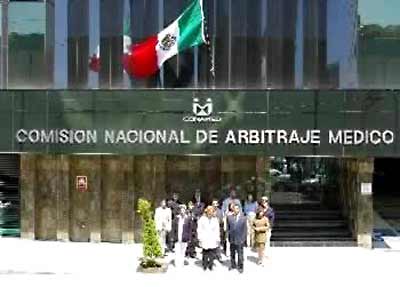
conamed

Every culture has its own expectations concerning their medical profession. The ancient Chinese paid their physician every day they were healthy in order to be treated for free whenever they were ill. In Mexico, doctors tend to be extremely Hippocratic in their approach – the idea here is that people whose social position has allowed them to learn a great deal now want to help you feel better. But what happens when a patient doesn’t see the improvement he expected?

In the United States, an unhappy patient pays a lot of money to a malpractice attorney and hopes for the best. In Mexico, that sort of patient has more options: he or she can go to the Ministerio Público (the district attorney) to file a criminal complaint for malpractice, go to PROFECO (the federal attorney for the protection of consumers) to file a civil complaint, or ask a medical commission to resolve the problem with expert arbitration. There is no cost involved in any of these options. Additionally, one can hire a private attorney to file the case in civil court, similar to what is done in the U.S. More and more, the medical commissions are becoming the preferred route.

CAME-BC, the Comisión de Arbitraje Médico del Estado de Baja California, is part of the state government and has been around in one form or another for about a decade. Originally it maintained a single office in Mexicali, the state capital. “To do our job, we have to be where the patients are,” says Dr Agustín Escobar, the head of the commission, “so we came to Tijuana in 2008. That’s where most of the medicine is being practiced in this state. Very soon we will be opening offices in Rosarito, Ensenada, and Tecate. We’re also working on a web presence like the one our big brother in Mexico City has.”

Yet another appreciation of tequila

~ ~
tequila_nacional.jpg
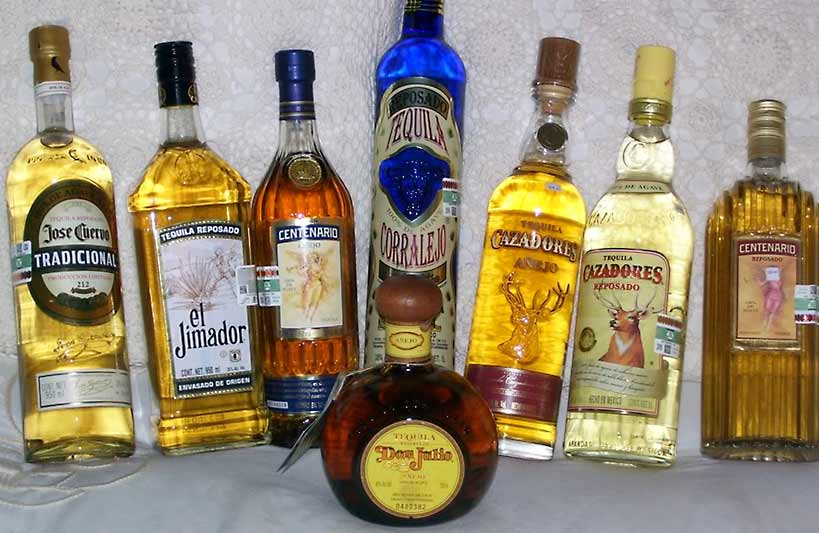
Although tequila does not come from Baja California, it is an integral part of our local culture. Tourists have been coming here for generations in search of it, so much so that a spring-breaker bar in Rosarito Beach once called itself (fancifully) The Tequila Museum. With the turn of this century, Tijuana has been setting aside a week in October to host an annual Expo Tequila. Similar festivals crop up frequently throughout the peninsula. And so a few words about this quintessentially Mexican spirit are in order.

Surely no other liquor is more misunderstood. Nor is there another that offers as varied or as rewarding a spectrum of flavors, everything from raw vegetal spirit to refinement rivalling cognac. Those who know tequila only from frat parties or chain restaurants will be surprised to discover that Don Julio blanco tastes exactly like raspberry eau-de-vie, that Gran Centenario añejo is reminiscent of a twenty-year-old Demerara rum, or that the flavors of Don Abraham and Herradura Antiguo surpass the descriptive power of words. To appreciate this spectrum, one first must get beyond the misunderstandings.

Dollars or Pesos?

~ ~
• • • SEE UPDATED INFORMATION AT END OF ARTICLE • • •

dollars and pesos in Baja California

Both work just fine. You can even use major credit cards.

Baja has been using dollars and pesos interchangeably ever since it received its first tourist a century and a half ago. Pretty much everyone accepts both, although out-of-the-way places, which keep very little money in the till, might make change in pesos. Even the symbol that both currencies use, $ (for solidus and shilling), is the same. To avoid confusion, the convention along the border is to use a distinctive suffix: “$25.00 m.n.” (moneda nacional) and “$2.00 dlls” (dollars).

The fun starts when you worry about the exchange rate. Every shop sets its own. Businesses that want dollars, such as supermarkets and Pemex stations, will offer a rate slightly better than the casas de cambio. Those that prefer pesos, usually the smaller operations, will offer a slightly lower rate. People who look to get the best price all around town will carry both currencies – but that certainly is not necessary.

Day-trips for alternative tourism

~ ~
Turista Libre

photos by Derrik Chinn

by Cristina González Madín

What do you call a calafia bus full of gringos who visit the most surreal parts of Tijuana and who take part in our most ordinary activities? Turista libre.

If the mental picture of this seems a little odd, we still have to mention that the fellow who organizes these day-trips is from the United States and lives in Tijuana by choice. Derrik Chinn is twenty-eight years old. Three years ago, he left his apartment in San Diego in order to move to Tijuana. And this journalist has enjoyed living here so much that, like so many who are fed up with the city’s bad press, he decided to do something about it.

“I couldn’t stand to hear all the nasty things that were being said about Tijuana. The place is actually very cool, life here is like nowhere else in the world. A lot of people in the U.S. tell me they’d like to visit but they’re afraid to or they don’t want to put up with the wait at the border or they don’t speak Spanish or, well, you get the idea. Sadly, they don’t care that pretty much everyone here speaks at least some English. There’s no reason to use the culture or the language as an excuse.” he says.

A few quesadillas

~ ~
quesadillas.jpg
 

The oldest published recipe for quesadillas, from 1831, is found in El cocinero mexicano. These are remarkably similar to the ones we still make today.

Quick quesadillas  Either make or buy small, soft tortillas. In the middle of each tortilla place some cheese, which can be fresh or aged cow’s milk cheese or even goat’s milk cheese if you add a bit of salt, then fold the tortilla in half and sew it together with cornbrush or maguey fiber, or pin the halves together with three blades of sacaton [Sporobolus wrightii]. Cook the quesadillas without delay, on a grill over live coals or on a griddle, until the cheese just starts to melt. Remove the threading and serve at once because they’re no good cold. Some people fry their quesadillas in deep fat or sprinkle them with salt and sauté them in black butter.

This recipe is unusual for a couple of reasons. It’s the only antojito to appear in Mexico’s first printed cookbook, which distinguishes it from things like tacos, memelas, and sopes. The gente de razón (as the upper class referred to itself), for whom cookbooks were published in those days, felt that indigenous cuisine was beneath their dignity. Even now restaurants that would never consider offering tacos, memelas, or sopes proudly offer some sort of quesadilla as an antojito, entremés, tentempié, or appetizer.

Further on we present several examples from our own Baja California restaurateurs.

When Hernán Cortés dined with Moctezuma, they ate what later became known as tacos. By using a corn tortilla the way that Ethiopians use njira bread, one can pick up bits of almost anything and eat it wrapper and all. But Cortés and Moctezuma did not eat quesadillas – there simply was no cheese among the hundreds of dishes at Moctezuma’s table. The quesadilla had to wait until Mexico developed a dairy industry. And that brings us to another unusual thing about quesadillas: Mexico is the only lactose-intolerant part of the world where cheese plays an important part in the local cuisine.