Dollars or Pesos?

~ ~
• • • SEE UPDATED INFORMATION AT END OF ARTICLE • • •

dollars and pesos in Baja California

Both work just fine. You can even use major credit cards.

Baja has been using dollars and pesos interchangeably ever since it received its first tourist a century and a half ago. Pretty much everyone accepts both, although out-of-the-way places, which keep very little money in the till, might make change in pesos. Even the symbol that both currencies use, $ (for solidus and shilling), is the same. To avoid confusion, the convention along the border is to use a distinctive suffix: “$25.00 m.n.” (moneda nacional) and “$2.00 dlls” (dollars).

The fun starts when you worry about the exchange rate. Every shop sets its own. Businesses that want dollars, such as supermarkets and Pemex stations, will offer a rate slightly better than the casas de cambio. Those that prefer pesos, usually the smaller operations, will offer a slightly lower rate. People who look to get the best price all around town will carry both currencies – but that certainly is not necessary.

Day-trips for alternative tourism

~ ~
Turista Libre

photos by Derrik Chinn

by Cristina González Madín

What do you call a calafia bus full of gringos who visit the most surreal parts of Tijuana and who take part in our most ordinary activities? Turista libre.

If the mental picture of this seems a little odd, we still have to mention that the fellow who organizes these day-trips is from the United States and lives in Tijuana by choice. Derrik Chinn is twenty-eight years old. Three years ago, he left his apartment in San Diego in order to move to Tijuana. And this journalist has enjoyed living here so much that, like so many who are fed up with the city’s bad press, he decided to do something about it.

“I couldn’t stand to hear all the nasty things that were being said about Tijuana. The place is actually very cool, life here is like nowhere else in the world. A lot of people in the U.S. tell me they’d like to visit but they’re afraid to or they don’t want to put up with the wait at the border or they don’t speak Spanish or, well, you get the idea. Sadly, they don’t care that pretty much everyone here speaks at least some English. There’s no reason to use the culture or the language as an excuse.” he says.

A few quesadillas

~ ~
quesadillas.jpg
 

The oldest published recipe for quesadillas, from 1831, is found in El cocinero mexicano. These are remarkably similar to the ones we still make today.

Quick quesadillas  Either make or buy small, soft tortillas. In the middle of each tortilla place some cheese, which can be fresh or aged cow’s milk cheese or even goat’s milk cheese if you add a bit of salt, then fold the tortilla in half and sew it together with cornbrush or maguey fiber, or pin the halves together with three blades of sacaton [Sporobolus wrightii]. Cook the quesadillas without delay, on a grill over live coals or on a griddle, until the cheese just starts to melt. Remove the threading and serve at once because they’re no good cold. Some people fry their quesadillas in deep fat or sprinkle them with salt and sauté them in black butter.

This recipe is unusual for a couple of reasons. It’s the only antojito to appear in Mexico’s first printed cookbook, which distinguishes it from things like tacos, memelas, and sopes. The gente de razón (as the upper class referred to itself), for whom cookbooks were published in those days, felt that indigenous cuisine was beneath their dignity. Even now restaurants that would never consider offering tacos, memelas, or sopes proudly offer some sort of quesadilla as an antojito, entremés, tentempié, or appetizer.

Further on we present several examples from our own Baja California restaurateurs.

When Hernán Cortés dined with Moctezuma, they ate what later became known as tacos. By using a corn tortilla the way that Ethiopians use njira bread, one can pick up bits of almost anything and eat it wrapper and all. But Cortés and Moctezuma did not eat quesadillas – there simply was no cheese among the hundreds of dishes at Moctezuma’s table. The quesadilla had to wait until Mexico developed a dairy industry. And that brings us to another unusual thing about quesadillas: Mexico is the only lactose-intolerant part of the world where cheese plays an important part in the local cuisine.

Do I need a passport to visit Baja California?

~ ~
• • • SEE UPDATED INFORMATION AT END OF ARTICLE • • •  pasaportes.jpg

The simple answer for all visitors from the U.S. and for most visitors from Canada is No, you don’t need no pinche passport. Here at the border, we see people crossing all the time without one. Across the border, at Across the Border, Anna Cearley has been collecting up reports from readers whose experiences confirm what we say.

And yet people continue to ask and the Internet’s self-appointed experts continue to give the same mistaken answer. The confusion has been caused from what both governments have been telling us. The U.S. government puts up frightening-sounding websites like “GetYouHome.gov” to talk about their “requirement” for “WHTI-compliant documents” and the Mexican government talks about enhancing security in order to continue the disastrous war on drugs. Nonetheless, people keep crossing into California and Baja California just as they have always been doing.

Those of us in The Real Tijuana cross the border, collectively, pretty much every day. We are Mexican citizens, U.S. citizens, and dual citizens. Our documentation varies but only the Mexican nationals among us use WHTI-compliant identification (laser visas and green cards) – the rest of us cross with expired U.S. passports, one of which is more than thirty years old. We have never been sent to Secondary for not being WHTI-compliant. We often see other people crossing with just a birth certificate.

Since the same questions have been cropping up over and over again, we thought it might be helpful to present a FAQ on the subject as it applies to our beat, the border between California and Baja California.

We do not intend to discourage the use of passports – we agree with the Mexican government that the passport is the “ideal international identity document” – but we disagree with irrational impediments to tourism and we are categorically opposed to any restriction on fronterizo culture. Since it is to the government’s benefit that its citizens carry passports, it behooves our governments to facilitate our access to this document. And yet both the Mexican and the U.S. governments place escalating burdens on the individual citizen instead.

Eco-Sol works to improve the environment and to develop ecological awareness in Baja.

~ ~
bahia04.jpg


by Laura Durán

Seventy percent of the land in Baja California is under environmental protection. Among the largest areas are Parque Constitución (Laguna Hanson), Sierra de San Pedro Mártir, the Biosphere Preserve of the Vizcaíno Desert, Valle de los Cirios, the islands in the Sea of Cortez, and the Colorado River Delta.

Many xerophytic plants serve to retain soil and prevent erosion. Knowing about these plants and being able to use them are very important for those whose houses are built on slopes and hillsides. In this way, erosion and mudslides can be prevented ecologically.

Tijuana’s elementary-school teachers get to receive training in such environmentalist subjects by members of Eco-Sol, a local nonprofit organization. According to José Luis Morales, the NPO’s president, the teachers’ involvement is essential in order to develop their students’ awareness at an early age and to ensure that future generations act more kindly toward the environment. “Our educational system has taken a bold step by arranging to have environmentalist groups prepare its teachers in this curriculum.”

The tuna universitaria has come to Baja California

~ ~
Tuna UABC at Giuseppis

If you’re in the right restaurant at the right time, something unusual will happen. A bunch of guys show up dressed in Renaissance clothes, carrying Renaissance instruments. They begin playing in bright tones and quick rhythms – possibly Italian, to gringo ears, but the lyrics are unmistakably Spanish – while the little guy with the tambourine capers theatrically.

What happened to the mariachis and “La Bamba”? Has Tijuana suddenly become addicted to Lope de Vega? Or maybe the restaurant thought we’d like to watch “The Two Gentlemen of Verona” in translation?

It’s a bit disorienting, here in the city that began as a Hollywood-style fantasy, to encounter something so deeply traditional and so authentically hispanic as Baja’s first tuna universitaria. Even the name is confusing … the locals know tuna to be cactus fruit and the gringos think it’s a fish … but the term refers to a group of tunos, university students who sing for their supper.

The tradition can be traced back continuously to the beginning of the thirteenth century with the founding of the Studium Generale (now University) of Palencia during the reign of Alfonso VIII. Nowadays tunas are established throughout the Spanish-speaking world. They’re even found in such unlikely places as Oxford, Belgium, and Japan. In central Mexico, tunas date back to the Porfiriato. For UABC (the Universidad Autónoma de Baja California), however, the tuna arrived in 2008.

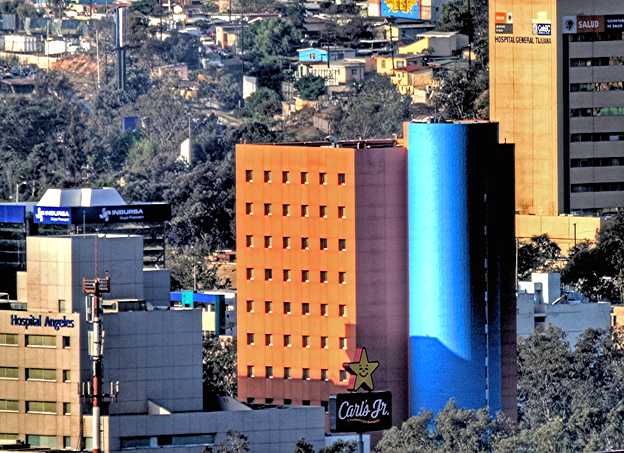
Tijuana’s health industry prepares for international competition

~ ~
hospitales_tij.jpg

by Laura Durán

Tijuana Health without Borders, the medical tourism business cluster that was created two years ago, now counts one hundred eighty organizations as members and has created the first academic program for medical tourism in all of Latin America.

Today more than ever Tijuana is looking to develop its tourism. Not necessarily the leisure tourism of earlier years, because that has been depressed by fear, Customs lines, and the recession. Instead, Tijuana’s new tourism is being fueled by medical necessity. Patients come here for the high quality of our medicine, because our doctors spend time with their patients, and because health care in Tijuana is much more affordable than it is in the United States.

“The response to our educational program exceeded anything we imagined” said Jorge Gutiérrez, the treasurer and logistics coordinator of the Cluster. “It demonstrates the degree of interest that exists in this area. We thought maybe twenty people would show up and instead we have one hundred thirty who are committing one hundred sixty hours of their time, an entire semester, to earn this university certificate.”